
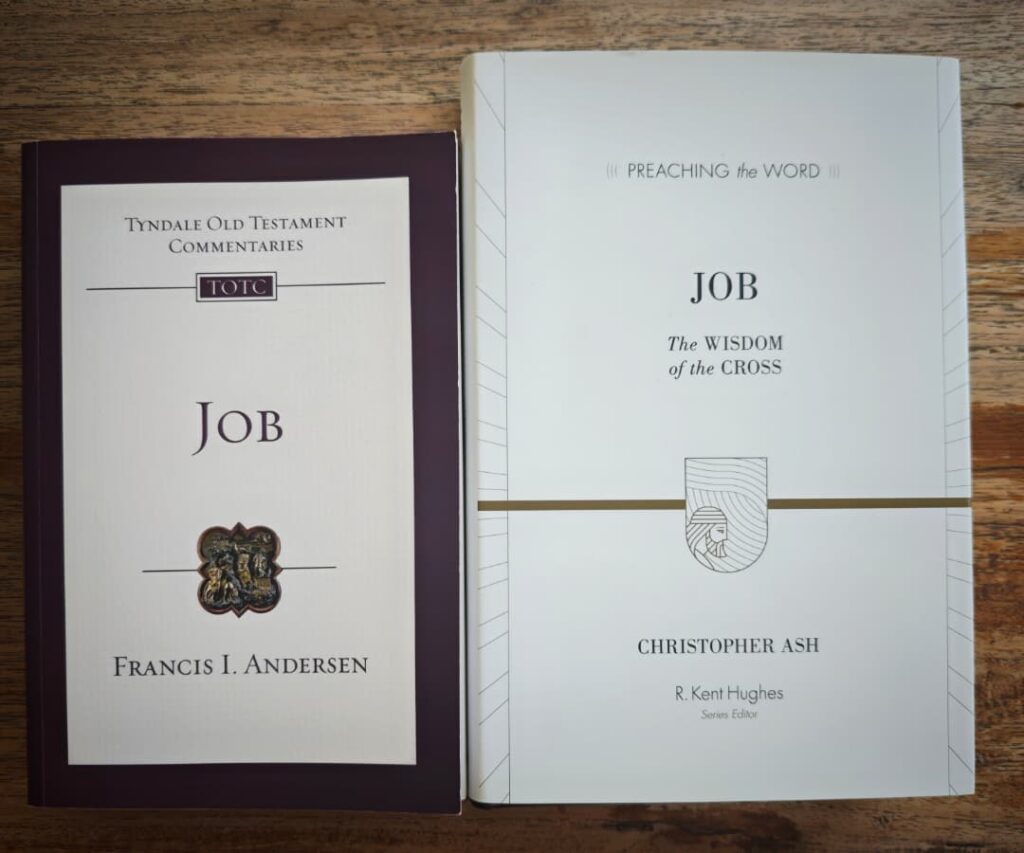
Having read Tyndale Old Testament Commentaries on Job by Francis I. According to Anderson (1976) and Christopher Ash’s Preaching the Word commentary on Job (2014), it is clearly arguable that one doesn’t really need to read commentaries.
They tend to expound on a sentence, explaining the peripherals that are not necessary to understand the core message.
The beauty of the Book of Job lies in the language of lamentation by Job and the rhetorical questions posed by Job and his friends as to why a good and righteous believer in God, like Job, can suffer so much and have so much misfortune permitted by his God to be visited on him.
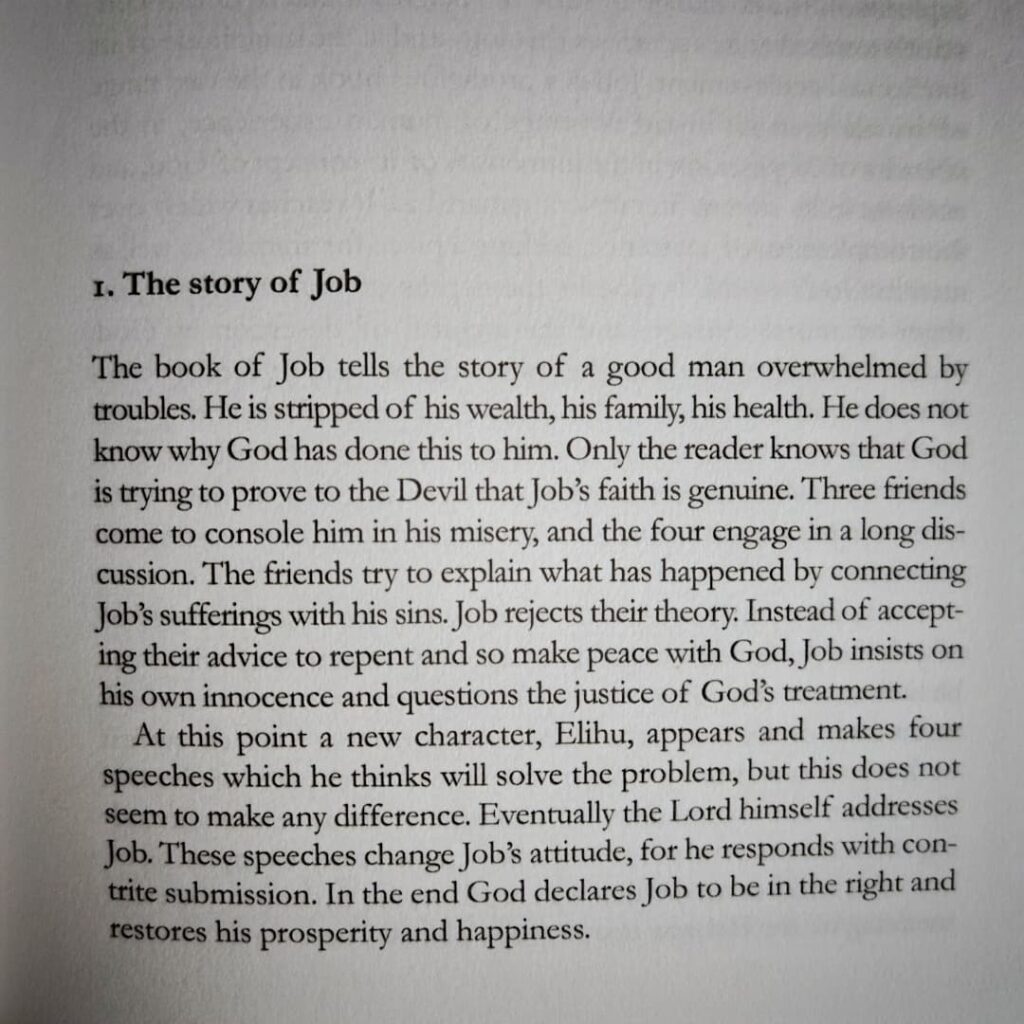
Personally, I feel the lamentations and rhetorical questions can be shortened. They tend to be variations of the same theme, like the Goldberg Variations. They can be tedious to read if one has no patience.
Anderson has set out seven supposed stages in the development of the book that are recognised by scholars. (See pp. 44 to 57) This may explain why the text can seem prolix and repetitive.
While the composer or composers of the Book of Job have beautifully posed the question of theodicy, i.e.,
Christians must keep faith with their God despite suffering, illness, and pain, which an omnipotent God, i.e., the Christian God, is supposed to be able to ward off or cure.
He/they has conveniently skirted the issue by stating that God allowed Job to suffer because God allows it (due to a wager with Satan).
The above may not represent my entire view. They are presented as a devil’s advocate.