The Baba community is loosely referred to as Peranakan Chinese in Malaysia.
The Babas in Malaysia started with immigrant Chinese from China (who, during the Qing dynasty, sailed to Malaya and married Malays or the local indigenous inhabitants of Malaya or even Sumatra).
Their first-generation female children emulated the dressing and cooking of their mothers, but in terms of orientation, they followed the Chinese religion and cultural practices of their fathers.
To converse with their Malay mothers, they used a form of Malay called Baba Malay.
The 2nd and future generations from the marriage departed more and more from the traditional forms practiced, as their spouses were mainly Chinese and non-Babas.
That is why my wife’s sister-in-law, who is from a Penang Baba family, does not wear the sarong and kebaya on a daily basis, while her mom is always in a sarong and kebaya.
Over time, the Babas and Nyonyas cannot be identified by the way they live, talk, eat, or dress, but by self- description and by proving they are descended from a Chinese immigrant who had married a local non- Chinese wife and lived the Baba Nyonya way of life.
This would be my view, taking a historical perspective.
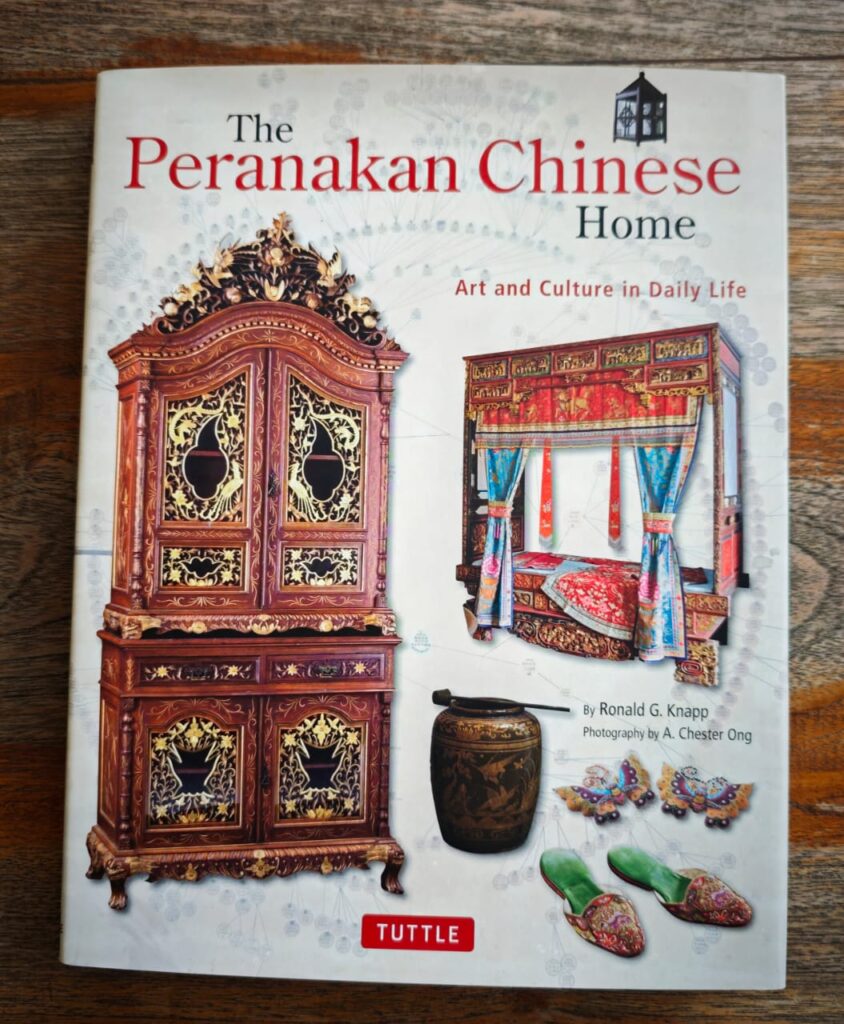
The homes of the rich Babas are exquisitely furnished with many Baba motifs. An excellent book on these homes is The Peranakan Chinese Home by Ronald G. Knapp, with photography by A. Chester Ong, 2012.