In October 2025, the Malaysian government officially recognized the Baba Nyonya community as a distinct ethnic group, allowing members to have “Baba Nyonya” listed as their race on official documents.
But who is a Baba and a Nyonya? Is a Baba Nyonya a race or merely a cultural practice?
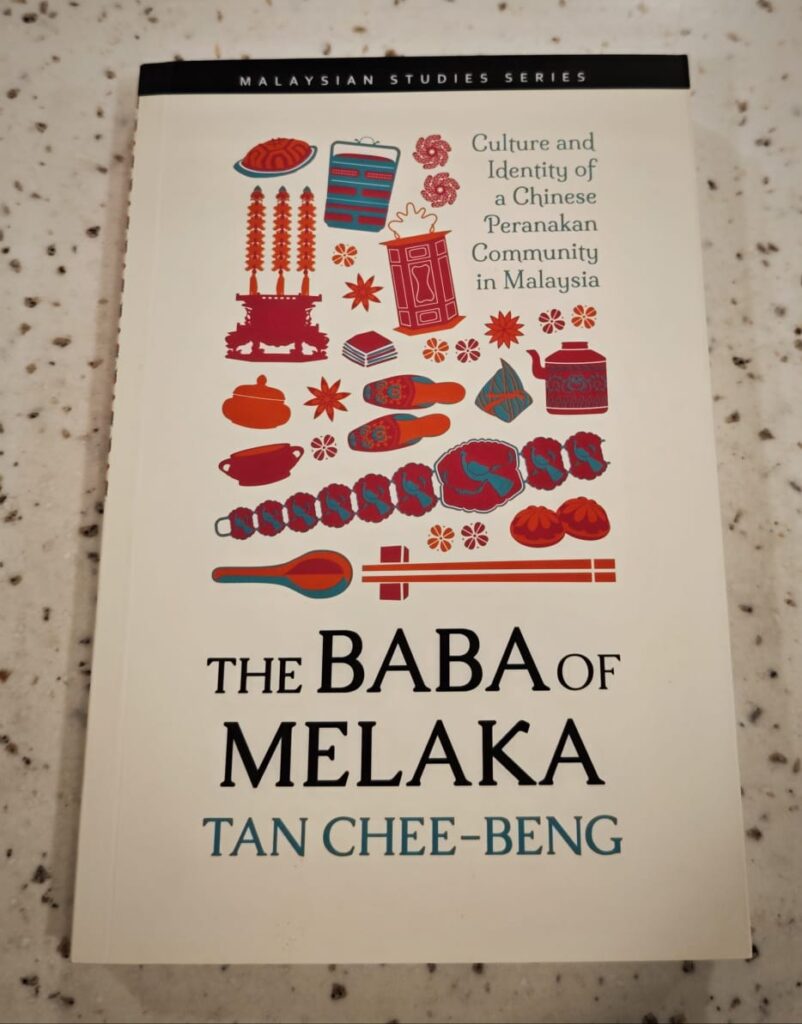
There is no definitive answer as to who is a Baba, according to Tan Chee Beng in his book The Baba of Melaka (2020).
Chee Beng did his doctoral field research on the Baba in Melaka in 1977. He published his book in 1988 and a revised edition in 2020. This is a book worth reading, as he had interviewed many Babas. They have since sadly passed on.
He used self-ascription as a primary criterion—that is, Babas are those Chinese who identify themselves as “Baba.” (P 5).
In my view, the old criteria like spoken language, food consumed, attire worn, and religion practised to identify a person as a Baba are no longer applicable.
Traditionally, a Baba speaks a Baba-style of Malay called Baba Malay. This is no longer true, as most Babas, especially the Babas in Singapore, speak English. Babas in Penang speak Penang Hokkien. (P 17)
Traditionally, a Baba cooks Nyonya cuisine at home. This is no longer true.
Traditionally, the attire worn by a Baba is traditional Chinese-style, and by a Nyonya is a sarong and the Malay long-sleeve blouse called kebaya. This is no longer true.
Traditionally, the Baba culture is a combination of traditional Chinese practices with some Malay cultural influences. This is no longer true. Most Babas in Singapore today are Christians. (P 16)